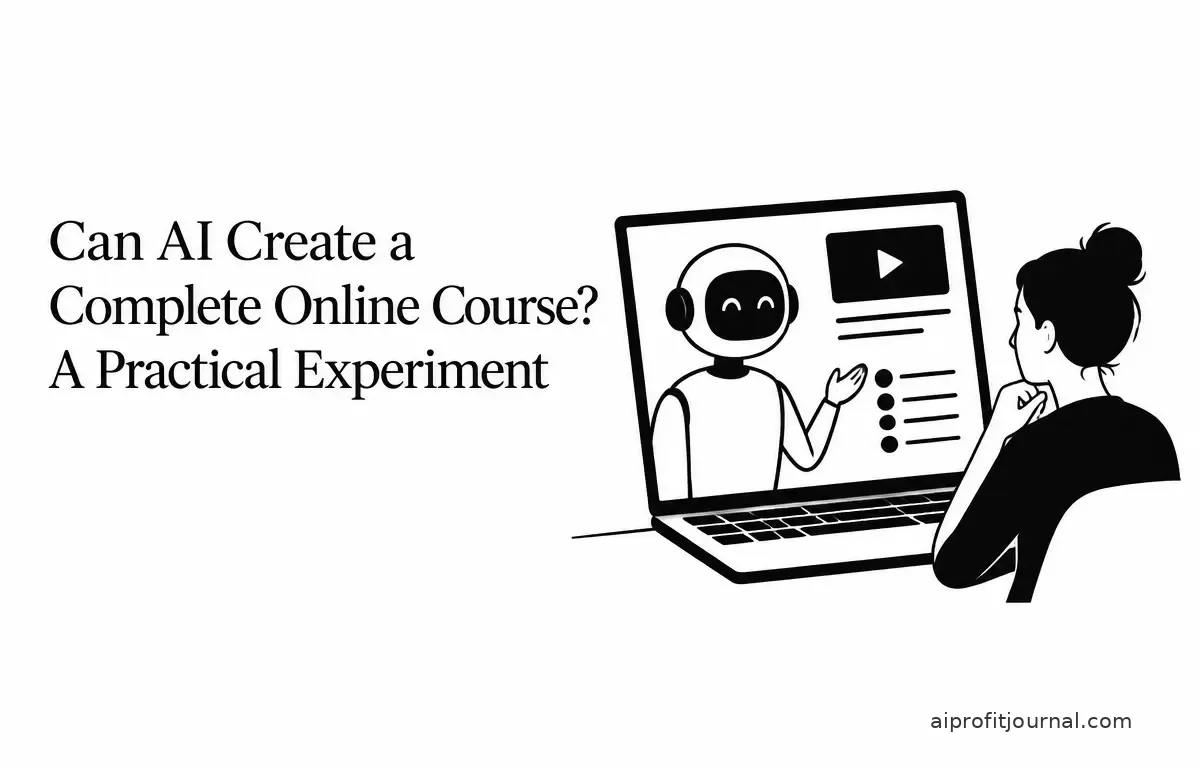
The integration of artificial intelligence (AI) into educational content creation has revolutionized the way online courses are developed. AI-powered tools now promise to streamline the process, enabling educators and entrepreneurs to generate comprehensive courses efficiently. This article delves into the feasibility of AI creating a complete online course by conducting a practical experiment using an AI course generator.
Understanding AI-Powered Course Creation
AI course generators are platforms that utilize artificial intelligence to automate various aspects of course development, including content creation, structuring, and multimedia integration. These tools aim to simplify the traditionally labor-intensive process of course creation, making it more accessible and less time-consuming. With the rapid evolution of AI technologies, educators can leverage these tools to enhance their teaching methods and improve learner engagement.
Popular AI Course Generators
Several AI-powered platforms have emerged, each offering unique features to assist in course creation:
- Coursbit: Transforms any topic into a structured course with modules, lessons, quizzes, and multimedia elements. (coursbit.com)
- AICoursify: Generates complete courses, including lessons, quizzes, slides, and voiceovers, ready for publishing and selling. (aicoursify.com)
- HACC Gen: Assists educators in converting academic expertise into engaging online courses with AI support and human oversight. (haccgen.com)
- MakeOnlineCourse: Creates video courses from a simple description, handling scriptwriting, narration, and video production. (makeonlinecourse.com)
- CoursesBy.ai: Offers AI-driven course generation with structured lessons, interactive activities, and export options. (coursesby.ai)
Conducting the Experiment: Creating an Online Course with AI
To assess the capabilities of AI in course creation, we selected Coursbit for this experiment due to its comprehensive features and user-friendly interface. Below is the step-by-step process of using Coursbit to create a course.
Step 1: Selecting the Topic
After careful consideration, we chose “Introduction to Digital Marketing” as the course topic. This choice aims to provide foundational knowledge for beginners who wish to understand digital marketing strategies, tools, and best practices. The topic is broad enough to allow the AI to showcase its potential while also being relevant for today’s learners.
Step 2: Inputting the Topic into Coursbit
Upon entering the topic into Coursbit, the AI generated a structured course outline that included modules, lessons, quizzes, and suggested multimedia elements. For instance, the generated outline included modules on “SEO Basics,” “Content Marketing,” “Social Media Strategies,” and “Email Marketing Essentials,” encapsulating the fundamental aspects of digital marketing and breaking down complex concepts into manageable parts.
Step 3: Reviewing and Customizing the Generated Content
Although the AI-generated content served as a solid foundation, it was essential to review each module and lesson thoroughly. This step allowed us to make necessary adjustments to align with our educational objectives and ensure accuracy. For example, while developing the module on “SEO Basics,” we opted to update it with current SEO tools and practices, such as the latest Google algorithm changes, to provide relevance and depth to the students. Incorporating real-world case studies made the theoretical concepts more relatable and positively impacted learning outcomes.
Step 4: Exporting and Publishing the Course
After finalizing the content, we exported the course as a PDF and PowerPoint presentation, making it ready for distribution. This simple exporting process showcases one of the advantages of using AI tools, as traditional course creation often involves multiple steps and format conversions. Additionally, Coursbit allowed us to categorize the course for easy publishing on various online learning platforms, simplifying the logistical side of course distribution.
Insights and Observations
The experiment demonstrated that AI can effectively generate a comprehensive course structure and content. However, human intervention remains crucial to ensure the material’s accuracy, relevance, and alignment with specific learning objectives. We noted several key insights during the process:
- Initial Structure Quality: The AI was able to provide a coherent course structure, but the depth of content varied according to the complexity of the topic.
- Customization Needs: Tailoring the AI’s suggestions was necessary to better fit the intended audience and learning objectives, particularly for niche markets.
- Engagement Elements: While AI offers suggestions for multimedia integration, incorporating unique elements like instructor videos or personal anecdotes can create a more engaging course experience. Implementing interactive quizzes or discussion prompts further enhances learner engagement.
Advantages of Using AI in Course Creation
- Efficiency: AI accelerates the initial stages of course development, streamlining content structuring and material creation.
- Scalability: Educators can produce multiple courses simultaneously, effectively catering to diverse learner needs and markets.
- Consistency: AI ensures uniformity in course structure and formatting, enhancing the learner experience and making it easier to follow along.
Limitations and Considerations
Despite the clear advantages, there are limitations associated with AI course generation:
- Quality Control: AI-generated content may lack depth or context; thorough human review is necessary to maintain high standards and meet educational goals.
- Customization: Tailoring content for specific learner demographics or niche topics may require significant manual adjustments to satisfy diverse audiences. For example, technical courses may demand a higher level of expertise than general education topics.
- Dependence on Input Quality: The effectiveness of AI tools relies heavily on the clarity and comprehensiveness of the instructions provided by the educator, meaning clear guidance is vital for optimal results.
Conclusion
AI has the potential to revolutionize online course creation by automating routine tasks and providing a structured framework for content development. While AI tools like Coursbit can generate comprehensive course outlines and materials, human expertise remains essential to refine and customize the content, ensuring it meets educational standards and learner expectations. As technology progresses, the integration of AI into educational practices may pave the way for innovative, accessible, and personalized learning experiences that cater to an increasingly diverse student population.
Frequently Asked Questions (FAQs)
1. Can AI create an entire online course without human intervention?
While AI can generate a complete course structure and content, human oversight is necessary to ensure accuracy, relevance, and alignment with learning objectives. Educators provide context and adjustments that AI may not interpret correctly.
2. Are AI-generated courses of high quality?
AI-generated courses can serve as a solid foundation, but they often require human refinement to enhance depth, context, and engagement, especially for complex or sensitive subjects.
3. How long does it take to create a course using AI tools?
AI tools can significantly reduce the time spent on initial course development stages, but the total time varies based on the complexity of the topic and the extent of customization required.
4. Are AI course generators suitable for all types of courses?
AI course generators are versatile and can be used for various course types, but their effectiveness may vary based on the subject matter and desired depth of content. More specialized fields may require greater human input.
5. What are the costs associated with using AI course generators?
Costs vary depending on the platform and features offered. Some platforms provide free trials or basic plans, while others may involve subscriptions or one-time payment options. Evaluating the return on investment considering time saved during course development can significantly contribute to informed budgeting.