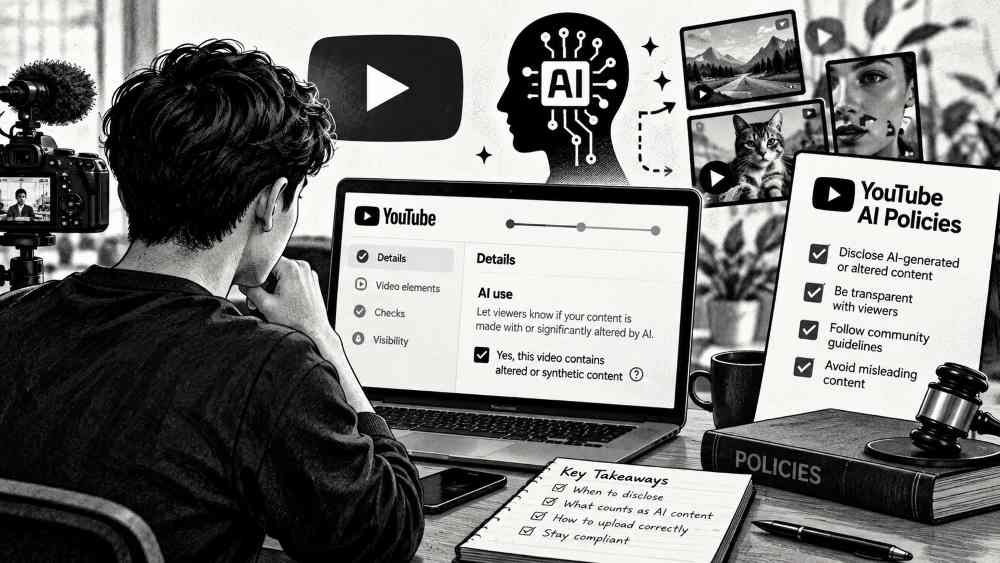
YouTube’s integration of artificial intelligence (AI) into content creation has opened new avenues for creators, but it also brings a set of guidelines to ensure content quality and authenticity. Understanding and adhering to these policies is crucial for maintaining monetization eligibility and upholding community standards. This article provides an overview of YouTube’s AI content policies and offers practical steps for creators to comply.
Understanding YouTube’s AI Content Policies
YouTube permits the use of AI in content creation but imposes specific requirements to maintain content integrity and viewer trust. The key aspects of these policies include:
1. Disclosure of AI-Generated or Altered Content
Creators must disclose when content is generated or meaningfully altered using AI, especially if it appears realistic. This disclosure is made during the upload process in YouTube Studio by selecting the ‘AI use’ setting. The disclosure helps viewers understand the nature of the content they are viewing. Examples requiring disclosure include:
- Making a real person appear to say or do something they didn’t.
- Altering footage of a real event or place.
- Generating a realistic scene that didn’t actually occur.
- Creating music that is the main focus of the video.
Minor edits or clearly unrealistic content do not require disclosure. For instance, using AI to add a fantasy element, like depicting someone floating in space, does not necessitate a disclosure.
2. Inauthentic Content and Monetization
YouTube’s monetization policies prohibit content that is mass-produced, generic, repetitive, or manipulative. This includes:
- Content made with generic or unoriginal templates giving the impression of mass production.
- Highly similar storylines repeated across videos.
- Image slideshows, templated storylines, or scrolling text with minimal or no narrative.
To remain eligible for monetization, creators should focus on producing original, authentic content that adds value to viewers.
Practical Steps for Compliance
To align with YouTube’s AI content policies, creators can follow these actionable steps:
1. Implement Clear Disclosure Practices
Always disclose AI-generated or altered content that appears realistic. This transparency builds trust with your audience and ensures compliance with YouTube’s guidelines.
2. Prioritize Originality and Quality
Avoid creating content that feels repetitive or lacks originality. Instead, focus on producing unique and engaging videos that showcase your creativity and provide value to your audience.
3. Stay Informed About Policy Updates
YouTube’s policies may evolve over time. Regularly review YouTube’s official guidelines and updates to stay informed about any changes that may affect your content creation and monetization strategies.
Conclusion
By understanding and adhering to YouTube’s AI content policies, creators can effectively integrate AI tools into their content creation process while maintaining compliance and audience trust. Focusing on originality, quality, and transparency will help ensure a successful and sustainable presence on the platform.
Frequently Asked Questions (FAQs)
1. Do I need to disclose all AI-generated content on YouTube?
No, only content that appears realistic and could mislead viewers requires disclosure. Minor edits or clearly unrealistic content do not need to be disclosed.
2. What types of content are considered inauthentic under YouTube’s policies?
Content that is mass-produced, generic, repetitive, or manipulative is considered inauthentic and ineligible for monetization.
3. How can I ensure my AI-assisted content remains eligible for monetization?
Focus on creating original, high-quality content that adds value to your audience. Avoid repetitive or low-effort videos, and always disclose realistic AI-generated or altered content.
4. Are there any exceptions to YouTube’s AI content policies?
Yes, content with educational, documentary, scientific, or artistic context may be allowed even if it violates certain policies, provided it serves the public interest.
5. How can I stay updated on YouTube’s AI content policies?
Regularly review YouTube’s official guidelines and updates to stay informed about any changes that may affect your content creation and monetization strategies.