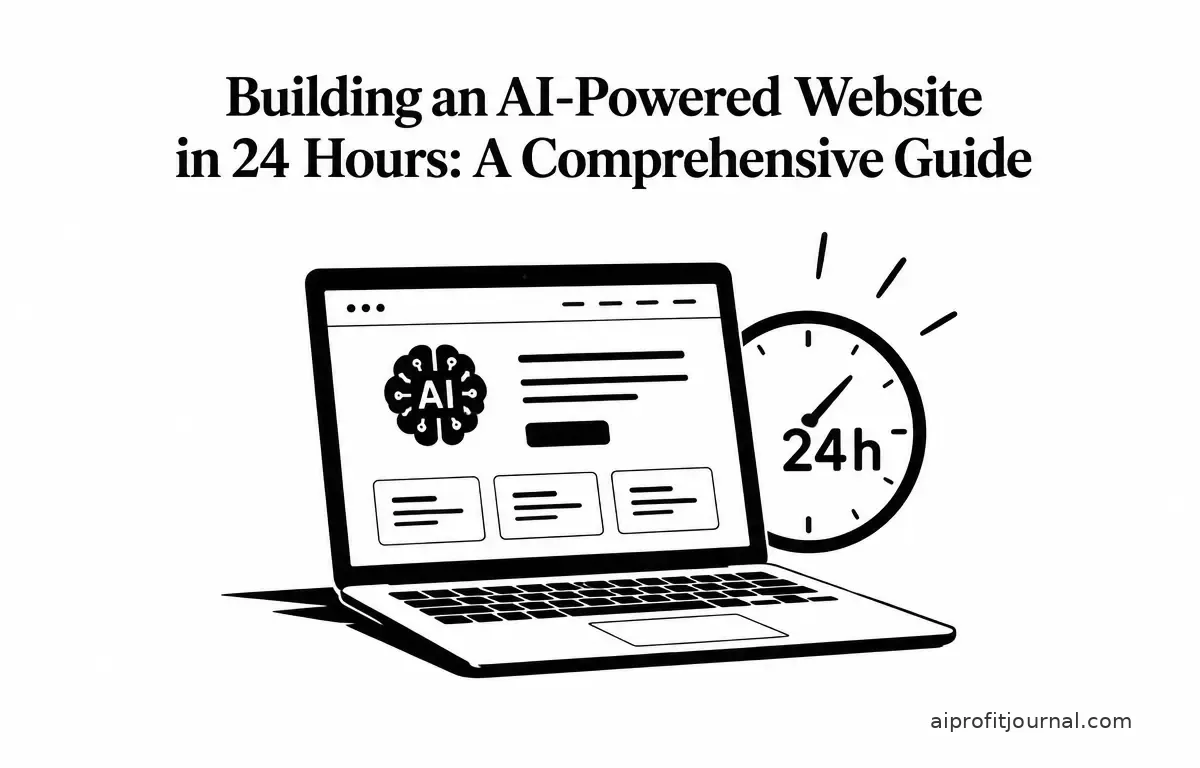
In today’s digital era, establishing an online presence is crucial for businesses and individuals alike. Advancements in artificial intelligence (AI) have streamlined the website creation process, enabling the development of sophisticated sites in a fraction of the time. This guide outlines a structured approach to building an AI-powered website in 24 hours, covering planning, tool selection, and practical implementation steps.
Understanding the Benefits of AI in Website Development
Integrating AI into website development offers numerous advantages that modern developers can leverage:
- Efficiency: AI automates repetitive tasks like layout generation, image optimization, and content suggestions, which significantly reduces manual effort and saves time.
- Personalization: AI allows for tailored user experiences. For example, by analyzing user behavior, AI can recommend products or content that align with individual preferences, increasing engagement.
- Optimization: AI helps enhance performance through data-driven insights, such as identifying which elements of your page improve user engagement or conversion rates.
By leveraging AI effectively, developers can create dynamic and responsive websites that adapt seamlessly to user interactions and preferences, enhancing overall user satisfaction.
Step 1: Define Your Website’s Purpose and Goals
Before diving into development, it’s essential to clearly articulate the objectives of your website. You can consider the following critical questions:
- Target Audience: Identify who your primary users are. Are they tech-savvy millennials, busy parents, or retirees? Understanding your audience shapes your design and content strategy.
- Core Functionality: Determine what key features the site must offer. For instance, if you’re building an e-commerce site, you’ll need features like a shopping cart, user accounts, and secure payment methods.
- Content Strategy: Outline what type of content will engage your audience. Will it be blog posts, videos, or downloadable resources? Clearly defining your content helps maintain focus during execution.
A well-defined purpose not only guides design choices but also ensures the website meets user expectations effectively.
Step 2: Choose the Right AI-Powered Website Builder
Selecting an appropriate AI website builder is pivotal to your success. Here are some of the top options and their features:
- Wix ADI: Utilizes artificial intelligence to generate personalized website designs based on user input. Its intuitive interface allows for easy adjustments and rapid deployment.
- Framer AI: Focuses on design-led marketing sites and is packed with AI-driven features that facilitate rapid development, ideal for startup marketers.
- Hostinger AI Website Builder: Bundles AI website development with hosting services, enabling you to generate a complete website from just a simple brief.
When evaluating these platforms, consider their unique features, ease of use, customization options, and pricing. For instance, Wix ADI is particularly user-friendly, making it a good fit for beginners who require quick setup without extensive coding knowledge.
Step 3: Plan Your Website’s Structure and Content
Organizing your website into clearly defined sections is crucial. A traditional layout could look like this:
- Homepage: This should serve as an engaging introduction to your brand or services, highlighting key offerings and value propositions.
- About Us: Provide information about your mission, vision, and team to build trust with your audience.
- Services/Products: List detailed descriptions of what you offer, complete with visuals to create compelling listings.
- Contact: Clearly present methods for users to reach out, whether through forms, phone numbers, or social media links.
When developing content, ensure that it aligns with your brand voice and resonates with your target audience. This consistency is vital in cultivating a strong brand identity.
Step 4: Utilize AI Features for Design and Functionality
AI tools can significantly enhance both design and functionality. Here are several key features to consider:
- Design Assistance: Use AI to suggest layouts, color schemes, and typography that align with your brand identity. For example, tools like Looka can help create logos and branding kits instantly.
- Content Generation: Employ AI-driven copywriting tools, such as Jasper or Copy.ai, to produce engaging and SEO-friendly content automatically.
- SEO Optimization: Implement AI tools that analyze keywords, competitor rankings, and suggest improvements, maximizing your site’s visibility on search engines.
- User Feedback Analysis: Utilize AI to gather user feedback, recognizing patterns and sentiments that can be analyzed to improve user experiences.
Integrating these features not only expedites the development process but also enhances the quality of your website, making it more appealing to visitors.
Step 5: Implement E-Commerce and Interactive Elements
If your website includes an online store or interactive features, consider the following:
- E-Commerce Integration: Make sure to set up secure payment gateways (e.g., PayPal, Stripe) and an easy-to-navigate product catalog. Ensure compliance with necessary regulations, such as PCI-DSS for handling payment information.
- Interactive Forms: Create user-friendly forms for various purposes, such as contact forms, surveys, or booking systems, utilizing plugins for enhanced functionality.
- AI Chatbots: Integrate AI-powered chatbots to assist visitors in real-time. Tools like Drift or Intercom can improve customer service by providing immediate responses.
Your design must ensure these elements are intuitive and contribute positively to the overall user experience. For example, a seamless checkout experience can significantly reduce cart abandonment rates in e-commerce.
Step 6: Test and Optimize Your Website
Before launching your website, rigorous testing is required. Focus on the following aspects:
- Cross-Browser Testing: Ensure the site is compatible across different browsers like Chrome, Firefox, and Safari. Use tools like BrowserStack for comprehensive testing.
- Mobile Responsiveness: With the increasing number of mobile users, make sure your site is optimized for mobile devices. Tools like Google’s Mobile-Friendly Test can help assess this.
- Performance Testing: Check load times and optimize images and scripts. Use performance analytics tools such as GTmetrix or Google PageSpeed Insights to identify areas for improvement.
Additionally, consider implementing A/B testing to see how different variations of your site perform, helping you make data-driven decisions about design changes.
Step 7: Launch and Monitor Your Website
After launching your website, the real work begins:
- Analytics: Utilize AI-powered analytics tools like Google Analytics or Hotjar to monitor traffic, user engagement, and conversion metrics. These insights will inform future site adjustments and enhancements.
- Continuous Improvement: Regularly update content and features based on user feedback and analytics insights. For instance, run A/B tests to evaluate the effectiveness of different design choices or content formats.
- User Retention Strategies: Consider implementing email campaigns and loyalty programs informed by AI analytics to enhance user retention and encourage repeat visits.
This iterative approach ensures that your website remains relevant, user-friendly, and effective over time, allowing you to adapt to changing needs and preferences.
Conclusion
Building an AI-powered website in just 24 hours may seem ambitious, but with a structured approach encompassing purpose definition, tool selection, planning, and rigorous testing, it is entirely achievable. By effectively leveraging AI, you can create a high-quality online presence that meets the needs of your audience while also streamlining the development process. Embrace the power of AI, and let it transform your website into a dynamic platform that continually evolves with its users.