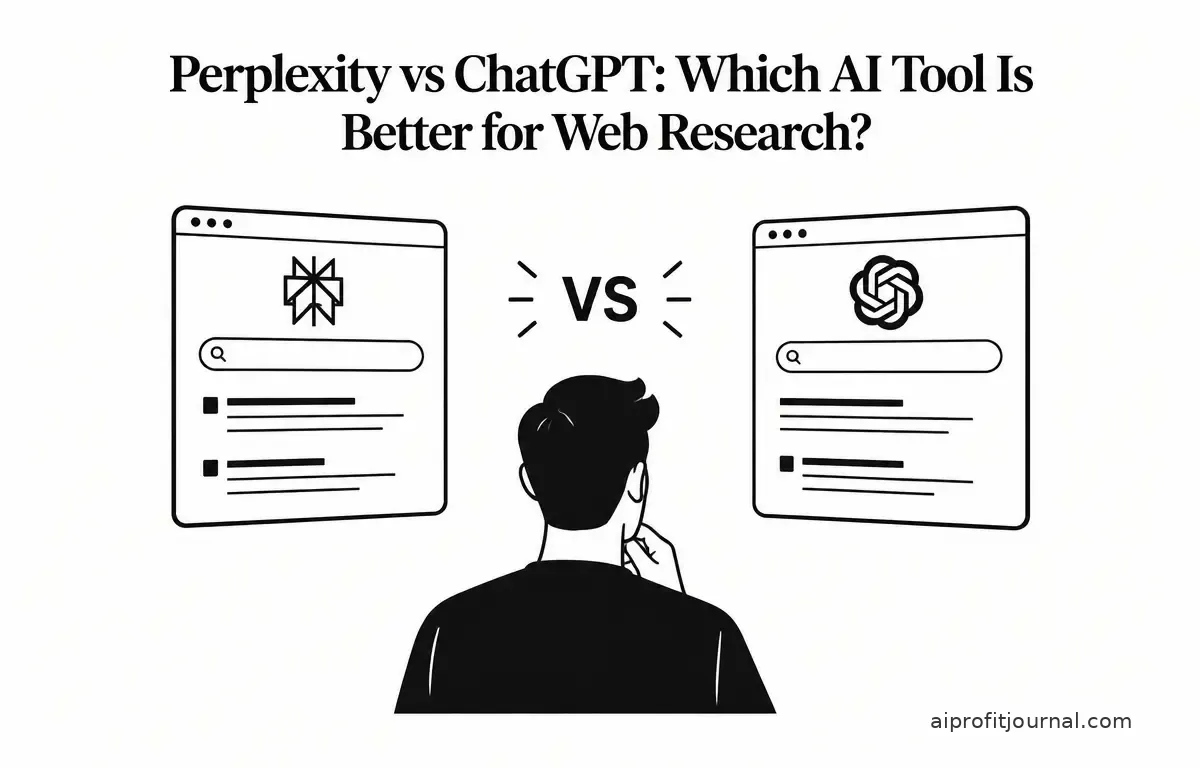
In the evolving landscape of artificial intelligence, tools like Perplexity and ChatGPT have emerged as prominent aids for web research. Understanding their distinctive capabilities is crucial for optimizing your research efficiency and accuracy. This guide delves into the nuances of each tool, examining their features, strengths, and weaknesses to help you make an informed choice based on your specific research needs.
Understanding Perplexity and ChatGPT
Perplexity is an AI-powered answer engine that conducts real-time web searches to provide concise, cited responses. Its primary focus lies in delivering accurate and up-to-date information, with a commitment to transparency in sourcing. This makes it particularly useful for fact-checking or obtaining current data. For example, if you were researching the latest statistics on climate change policies, Perplexity would quickly direct you to credible, recent sources with proper citations, enabling you to validate the information.
ChatGPT, developed by OpenAI, acts as a versatile conversational AI assistant capable of generating coherent and human-like text. It excels in a variety of tasks, including drafting content, providing coding assistance, and facilitating creative brainstorming. With the addition of web browsing capabilities, ChatGPT can access and retrieve information from the internet; however, these features are not always enabled by default. For instance, if you were looking to draft an article on emerging technologies, ChatGPT could generate detailed paragraphs that explore various trends, though its reliance on static knowledge or inactive browsing might limit its accuracy.
Key Differences Between Perplexity and ChatGPT
1. Real-Time Web Access and Citation
Perplexity is designed for live web searches, ensuring that every piece of information provided is current and verifiable. Each response is accompanied by numbered citations, direct links to original sources, which allows users to trace the information back to its origin. This feature is exceptionally useful for tasks requiring utmost accuracy and rapid access to data. For example, if a user queries the latest COVID-19 statistics, Perplexity would provide real-time data with links to health organization websites.
ChatGPT has web browsing capabilities that can be activated, allowing it to retrieve current information; however, the accuracy of this information can be variable, and it doesn’t always provide citations. When you ask ChatGPT for information, the tool may generate plausible responses without necessarily linking you to the original source, which can complicate verification. This limitation may not be ideal for scenarios where accuracy is paramount, such as academic research or legal inquiries.
2. Response Style and Depth
Perplexity crafts concise, query-focused answers that are optimized for swift information retrieval. This streamlined approach makes it particularly suitable for users who need straightforward answers without extensive elaboration. For someone looking for quick information about a topic, such as recent changes in financial regulations, Perplexity delivers direct data without unnecessary commentary, enabling the user to grasp the essentials rapidly.
ChatGPT employs a conversational style and often provides comprehensive, elaborative responses. This feature is beneficial for users requiring a deeper understanding of a subject or those engaging in creative content generation. For example, if you asked it to explain blockchain technology, ChatGPT could provide an in-depth explanation with multiple facets, engaging with examples, implications, and potential applications—ideal for content creators or educators looking for enriching material.
3. Specialized Features and Modes
Perplexity comes equipped with specialized search modes, such as the “Choose Sources” feature, allowing users to filter results based on specific criteria—such as articles, videos, or forums. This caters to users with particular preferences for source types, enhancing the precision of the search experience. Say you want to find educational videos on machine learning; Perplexity can guide you directly to appropriate resources without wading through unrelated information.
ChatGPT offers various modes that broaden its functionality, including capabilities for Deep Research, data analysis, and voice interactions. For instance, if you’re working on a multi-step data analysis project, ChatGPT could assist by guiding you through technical queries and analyzing datasets, which can be a unique advantage over Perplexity in complex tasks.
Choosing the Right Tool for Your Research Needs
When deciding between Perplexity and ChatGPT for web research, consider the following factors:
- Need for Current Information: If obtaining the latest data is essential, Perplexity’s real-time web access and verified citations make it the better option.
- Depth of Explanation: If you seek comprehensive elaborations on complex topics, ChatGPT’s conversational approach provides the depth needed for insightful discussions.
- Specific Source Requirements: If you require information from certain types of sources, Perplexity’s specialized modes can better cater to your specific needs.
- Complex Tasks and Analysis: For tasks requiring data analysis, coding help, or creative output, ChatGPT’s broader range of features offers more versatility.
Limitations and Considerations
Both tools have inherent limitations. While Perplexity’s reliance on live web searches ensures updated information, its effectiveness hinges on the availability and quality of online sources. Users are still responsible for critically evaluating the credibility of the linked resources, especially for high-stakes inquiries.
On the other hand, ChatGPT, despite its sophisticated capabilities, can occasionally produce responses that, although plausible, may contain inaccuracies or nonsensical elements. Users should approach critical information with caution and cross-verify with authoritative sources to avoid the pitfalls of misinformation.
Practical Workflows for Effective Research
To maximize the benefits of either tool, consider these structured workflows:
Using Perplexity for Research
- Define Your Query: Be specific about what you’re looking for. For instance, instead of asking “What are climate policies?” rephrase it as “What are the latest climate change policies in the European Union?”
- Conduct the Search: Enter your query in Perplexity and review the results it generates. Pay close attention to the citations provided.
- Validate Sources: Click through on sources and assess the credibility of the information. Look for recent publications or peer-reviewed articles for more reliable data.
- Summarize Findings: Compile the critical insights from your research for later use or citation.
Using ChatGPT for In-Depth Analysis
- Set Your Objective: Determine what you want to achieve—whether it’s drafting an article, brainstorming ideas, or understanding a complex concept.
- Frame Your Question: Clearly articulate your request. For example, “Can you explain the implications of autonomous vehicles on urban planning?”
- Engage with the Generated Text: Review the response closely. You may ask follow-up questions to clarify or delve deeper into specific sections.
- Refine Your Output: Edit and adapt the generated text according to your voice or publication requirements, adding citations where necessary.
Conclusion
In summary, Perplexity and ChatGPT serve distinct yet complementary roles in web research. Perplexity excels in providing current, cited information for quick fact checks, while ChatGPT offers a versatile platform for intricate analyses and creative tasks. Assessing your specific research needs—whether they’re focused on speed, depth, or particular source requirements—will guide you in selecting the most fitting tool for the job.
Frequently Asked Questions (FAQs)
1. Can Perplexity be used for tasks other than web research?
While Perplexity primarily focuses on real-time web searches with cited answers, its capabilities may not be as effective for more complex analytical tasks or creative content generation. Users seeking these functionalities would likely find ChatGPT more suitable.
2. Does ChatGPT always provide citations for its responses?
No, while ChatGPT can include citations when its browsing abilities are enabled, this is not a guaranteed feature in every interaction. To ensure accuracy in critical matters, users should verify information against additional sources.
3. Are there any privacy concerns when using these AI tools for research?
Both tools collect user data to enhance their services. It is advisable for users to review privacy policies to understand how their data is used and to make informed decisions regarding security.