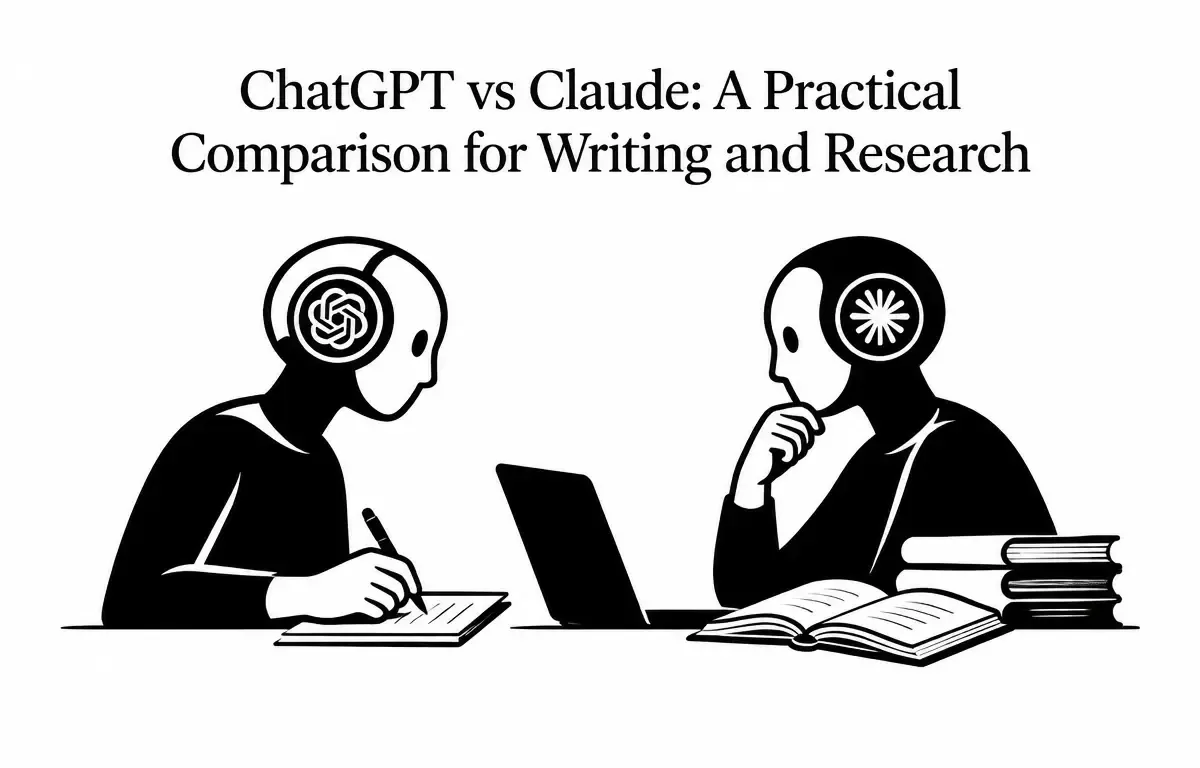
In the rapidly evolving landscape of artificial intelligence, two prominent AI assistants have emerged: OpenAI’s ChatGPT and Anthropic’s Claude. Both are designed to assist with writing and research tasks, yet they offer distinct features and capabilities. This article provides a comprehensive comparison to help you determine which AI assistant aligns best with your specific needs.
Overview of ChatGPT and Claude
ChatGPT is developed by OpenAI and is renowned for its versatility and integration capabilities. It supports a wide range of tasks, including drafting content, coding assistance, and data analysis. ChatGPT is accessible via web interfaces and integrates seamlessly with various platforms, enhancing its utility across different workflows.
Claude, created by Anthropic, emphasizes safety and ethical considerations in AI interactions. It is tailored for tasks requiring nuanced understanding and thoughtful responses, making it particularly effective for complex writing and research assignments. Claude is also accessible through web interfaces and offers features designed to promote responsible AI usage.
Writing Capabilities
Prose Quality
When it comes to generating human-like text, Claude often excels. Its outputs are characterized by a natural rhythm and precise word choice, resulting in content that closely mirrors human writing. This quality makes Claude particularly suitable for tasks where the tone and style are critical. For example, if you’re crafting a persuasive essay or a narrative piece, Claude’s ability to adapt its style can create a more engaging reading experience.
In contrast, ChatGPT’s writing, while competent, can sometimes exhibit a more structured and less conversational tone. For simple content needs, such as drafting emails or basic articles, this may not be a drawback. However, for creative projects or nuanced writing, you might find Claude’s outputs more satisfying. Additionally, users often report that Claude’s text reads more fluidly, which can enhance overall reader engagement.
Instruction Following
Claude demonstrates a strong ability to adhere to complex, multi-part instructions. For instance, if you require a piece of content that involves multiple sections, specific formatting, and citations, Claude can more effectively navigate these requirements. Its nuanced understanding of context allows it to parse intricate prompts more successfully, reducing the likelihood of misinterpretations.
ChatGPT also follows instructions effectively but may occasionally interpret complex prompts more literally. As a result, tasks that require a more flexible approach to instructions may be better suited for Claude. For example, if you need a research report that synthesizes information from various sources and includes specific examples, Claude might handle this task with greater finesse.
Long-Form Content Handling
For extensive documents, Claude’s larger context window allows it to maintain coherence over longer stretches of text. This feature is advantageous for drafting lengthy articles or reports where maintaining the thread of thought is crucial. Imagine you are working on a research paper with multiple chapters; Claude can better recall earlier sections, leading to a more cohesive final product.
In contrast, ChatGPT can manage long-form content effectively up to approximately 3,000 words. However, as the content extends beyond that length, you may notice a decline in coherence in earlier sections, particularly if the text requires intricate linking of ideas over a long narrative arc. For users who frequently develop extensive reports or theses, this limitation could be a significant consideration.
Research Capabilities
Web Browsing and Data Analysis
ChatGPT offers integrated web browsing capabilities, enabling it to access and incorporate up-to-date information from the internet. This feature is particularly useful for tasks that require current data or information beyond its training cut-off. For instance, if you’re conducting research on a rapidly evolving topic, such as technological advancements or current events, ChatGPT can pull in the latest information, which could be beneficial for maintaining accuracy and relevancy.
Conversely, Claude does not have native web browsing capabilities, which can limit its ability to provide the most recent information. While Claude excels at deriving insights from existing data and performing in-depth analysis, it may not be the best choice when real-time updates are necessary. You might find that the effectiveness of Claude comes into play more for deeper, analytical research rather than fast-paced, current topics.
Document Analysis
Claude’s design allows it to process and analyze large documents effectively. For example, if you are tasked with reviewing a lengthy research paper or legal document, Claude’s ability to extract key points and summarize them accurately can save you significant time. This skill is especially beneficial for professionals who need to provide insights or summaries on extensive material quickly.
ChatGPT can also analyze documents but may struggle with very large files due to its smaller context window. If you’re dealing with a mountain of paperwork—say, drafts of contracts or scholarly articles—Claude’s proficiency in distilling information can make a substantial difference in efficiency and quality of analysis.
Integration and Ecosystem
ChatGPT boasts an extensive ecosystem with numerous integrations, including plugins and third-party applications like project management tools or email clients. This versatility allows users to incorporate ChatGPT into various workflows seamlessly, maximizing productivity. For instance, you could leverage ChatGPT to automate parts of your writing process by integrating it with tools that help with research or citation management.
Claude’s ecosystem is more limited, focusing on core functionalities without extensive third-party integrations. While this might suffice for straightforward tasks, users seeking a more interconnected experience may find themselves limited. If your operations rely heavily on integrated tools, ChatGPT may be the better option.
Privacy and Security
Both AI assistants prioritize user privacy and data security. However, Claude places a stronger emphasis on ethical considerations, implementing safeguards to prevent misuse and ensure responsible AI interactions. For those concerned with how their data is used and the ethical implications of their AI tools, Claude may offer greater peace of mind.
ChatGPT also offers privacy features but may not have the same level of built-in ethical safeguards as Claude. Users aiming to utilize either platform in sensitive contexts—such as medical or legal fields—should carefully review the privacy policies and safety features before making a selection.
Pricing
As of 2026, both ChatGPT and Claude offer subscription plans priced at $20 per month for their standard tiers. This pricing provides access to their respective premium features, making them accessible options for individuals and organizations seeking advanced AI assistance. The subscription model allows for continuous updates and improvements, ensuring that users benefit from the latest advancements in AI technology.
Conclusion
Choosing between ChatGPT and Claude depends largely on your specific requirements:
- Choose ChatGPT if you need:
- Integrated web browsing capabilities for current information.
- Extensive third-party integrations to enhance workflow versatility.
- Assistance with tasks that benefit from a broad AI ecosystem.
- Choose Claude if you require:
- High-quality, human-like writing with a natural tone and style.
- Effective handling of long-form content and complex instructions.
- Strong ethical safeguards and privacy considerations in AI interactions.
Both AI assistants offer valuable features, and your choice should align with your specific writing and research needs. The decision ultimately hinges on weighing your requirements for real-time information, integration needs, and the importance of ethical considerations in AI tools.
Related Articles
- How to Create Consistent Characters with AI Image Generators
- Canva AI vs Adobe Firefly: Which Is Better for Everyday Design?
- How to Write Better AI Image Prompts: Examples and Techniques
- Best AI Image Generators for Realistic Photos in 2026
FAQs
1. Can Claude access the internet for real-time information?
No, Claude does not have native web browsing capabilities and cannot access real-time information from the internet.
2. Which AI assistant is better for drafting long research papers?
Claude is better suited for drafting long research papers due to its ability to maintain coherence over extended text and handle complex instructions effectively.
3. Does ChatGPT offer integrations with other tools?
Yes, ChatGPT offers extensive integrations with various tools and platforms, enhancing its versatility in different workflows.
4. Are both ChatGPT and Claude available on mobile devices?
Yes, both ChatGPT and Claude are accessible via web interfaces and have mobile applications for iOS and Android devices.
5. How do the privacy features of ChatGPT and Claude compare?
Both platforms prioritize user privacy, but Claude places a stronger emphasis on ethical safeguards and responsible AI interactions.
Additional Considerations: Choosing Based on Task Types
When deciding between ChatGPT and Claude, it’s also helpful to consider the type of writing or research task you’re undertaking. Here are some specific scenarios to illustrate how each assistant can excel based on targeted needs:
- Email Drafting: ChatGPT’s structured approach may make it quicker and more efficient to create straightforward emails, especially for year-end reports or meeting summaries.
- Creative Writing: Claude shines in tasks that require a human-like touch, such as drafting poetry or short stories, where emotional nuances matter greatly.
- Technical Writing: If your project involves standardized formats, ChatGPT’s robustness will likely streamline the process, allowing for fast-paced technical documents.
- Academic Research: When conducting literature reviews or synthesizing academic papers, Claude offers superior analytical abilities that provide deeper insights.
Evaluating your specific needs against these scenarios will help further narrow down the optimal choice. Both tools bring substantial advantages but cater to different aspects of writing and research efficiency.