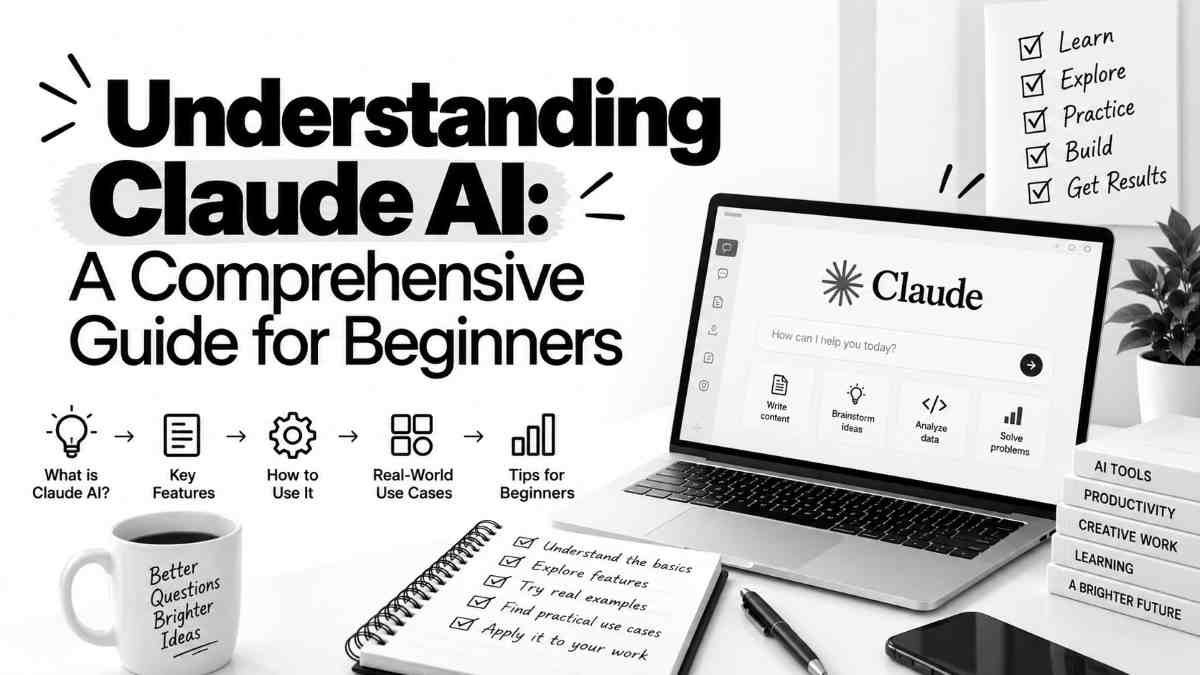
Artificial intelligence (AI) has revolutionized various industries, offering tools that enhance productivity, creativity, and decision-making. One such advancement is Claude AI, developed by Anthropic, a company founded by former OpenAI employees. This guide provides an introduction to Claude AI, exploring its capabilities and how it distinguishes itself from other AI models.
What Is Claude AI?
Claude AI is a family of large language models (LLMs) designed to understand and generate human-like text. These models are trained using a technique called “Constitutional AI,” which emphasizes ethical guidelines to ensure the AI’s outputs are helpful, honest, and harmless. This approach aims to mitigate risks associated with AI-generated content, such as misinformation or biased responses. (ibm.com)
Key Capabilities of Claude AI
Claude AI excels in various tasks, including:
- Text Generation: Producing coherent and contextually relevant text based on prompts.
- Code Assistance: Writing and debugging code across multiple programming languages.
- Document Analysis: Summarizing, translating, and extracting information from documents.
- Image Processing: Analyzing and generating descriptions for images, enhancing accessibility and understanding. (platform.claude.com)
Claude AI Models: Haiku, Sonnet, and Opus
Anthropic has developed several iterations of Claude AI, each tailored for specific applications:
- Haiku: A lightweight model optimized for speed and efficiency, suitable for tasks requiring quick responses.
- Sonnet: Balances performance and speed, ideal for general-purpose applications.
- Opus: The most advanced model, designed for complex reasoning and handling extensive datasets. (ibm.com)
How Claude AI Differs from Other AI Models
While Claude AI shares similarities with other AI models like OpenAI’s ChatGPT, it incorporates unique features:
- Constitutional AI Approach: Prioritizes ethical considerations to produce safer and more reliable outputs. (ibm.com)
- Enhanced Steerability: Allows users to guide the AI’s behavior more effectively, tailoring responses to specific needs. (arstechnica.com)
- Multimodal Capabilities: Supports both text and image inputs, enabling a broader range of applications. (platform.claude.com)
Practical Applications of Claude AI
Claude AI has been integrated into various platforms and services, demonstrating its versatility:
- Notion AI: Enhances productivity by assisting with note-taking, summarization, and content generation. (anthropic.com)
- Robin AI: Utilizes Claude for evaluating and drafting legal documents, streamlining contract analysis. (anthropic.com)
- Claude Science: A specialized workbench for scientists, integrating tools like PubMed and Jupyter for research purposes. (techradar.com)
Getting Started with Claude AI
To explore Claude AI’s capabilities, you can access it through Anthropic’s official website or via their API. The platform offers various subscription plans, including a free version with limited usage and paid tiers that provide expanded features and higher usage limits. (ibm.com)
Conclusion
Claude AI represents a significant advancement in artificial intelligence, combining powerful language processing with ethical design principles. Its diverse capabilities and unique approach make it a valuable tool for individuals and organizations seeking to leverage AI responsibly and effectively.
Related Articles
- How to Transform Your Blog Post into an Engaging Video Using AI
- Best AI Video Generators for YouTube in 2026: A Practical Comparison
- Navigating YouTube’s AI Policies: What Creators Need to Know
- How Beginners Can Start Making Money With AI Today
FAQs
1. What is the Constitutional AI approach used in Claude AI?
The Constitutional AI approach involves training AI models using a set of ethical guidelines, known as a “constitution,” to ensure their outputs are helpful, honest, and harmless. This method aims to reduce risks associated with AI-generated content, such as misinformation or biased responses. (ibm.com)
2. How does Claude AI differ from OpenAI’s ChatGPT?
While both Claude AI and ChatGPT are large language models designed for text generation, Claude AI emphasizes ethical considerations through its Constitutional AI approach, allowing for more steerable and reliable outputs. Additionally, Claude AI supports both text and image inputs, offering multimodal capabilities. (ibm.com)
3. What are the different models in the Claude AI family?
The Claude AI family includes three models: Haiku, Sonnet, and Opus. Haiku is optimized for speed and efficiency, Sonnet balances performance and speed for general-purpose tasks, and Opus is the most advanced model, designed for complex reasoning and handling extensive datasets. (ibm.com)
4. How can I access Claude AI?
You can access Claude AI through Anthropic’s official website or via their API. The platform offers various subscription plans, including a free version with limited usage and paid tiers that provide expanded features and higher usage limits. (ibm.com)
5. What are some practical applications of Claude AI?
Claude AI has been integrated into various platforms and services, such as Notion AI for productivity enhancement, Robin AI for legal document analysis, and Claude Science for scientific research, demonstrating its versatility across different domains. (anthropic.com)